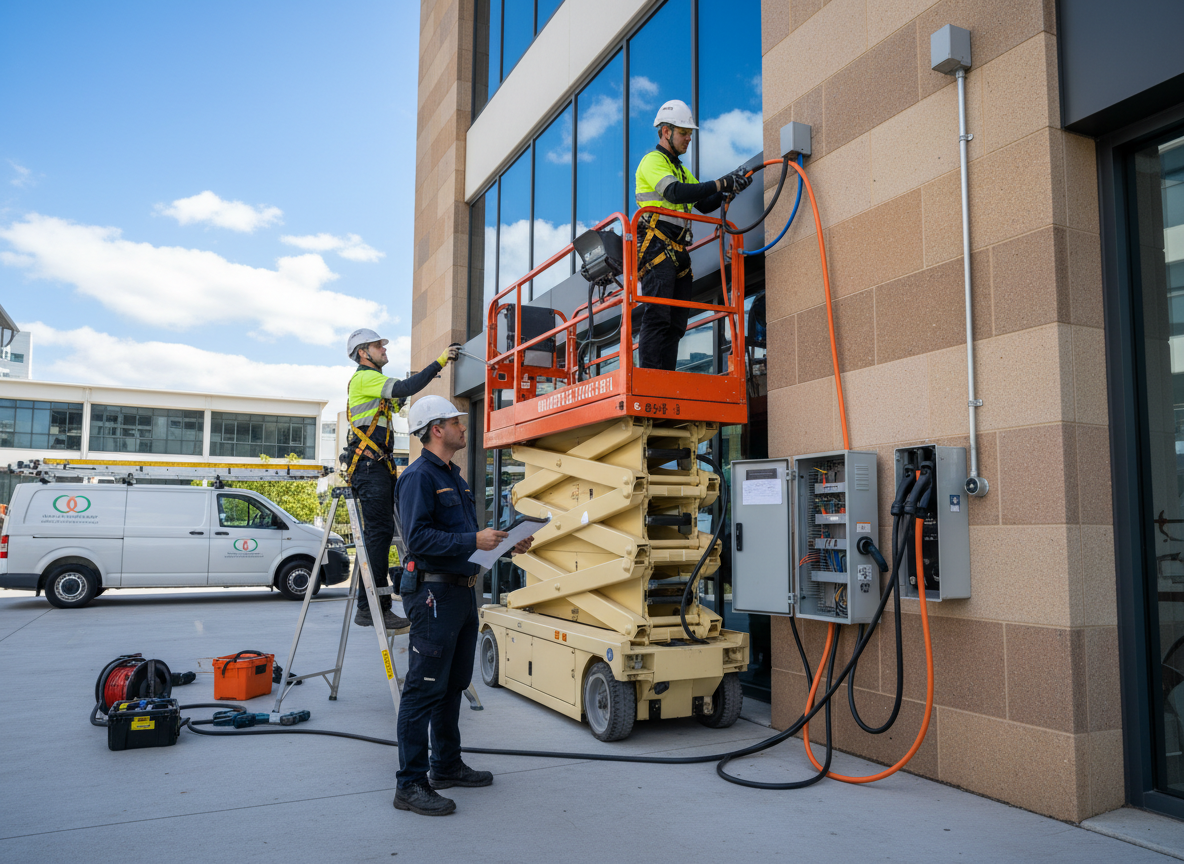
Who three phase charging suits in Sydney
A 22 kW three phase charger only pays off when two things line up: the home has three phase supply, and the car can accept AC power across all three phases at a higher rate. If either is missing, a 7 kW single phase wall charger gives the same real speed for less outlay.
How the onboard charger caps the speed
A wall charger feeds AC power to the car, and the car's onboard charger converts it for the battery. That onboard part sets the ceiling. If it is rated well below 22 kW, a bigger wall unit cannot push past it. Tesla, BYD, MG, Hyundai and other makers list this AC limit in the vehicle specifications.
Matching home power, charger and car
On a single phase home, a 7 kW Level 2 wall charger is usually the sensible fit. On a three phase home, a three phase charger lets a compatible car draw more. Licensed professionals can confirm the supply at the switchboard, and any change to the connection involves your local network, Ausgrid or Endeavour Energy depending on the suburb.
The cost decision between 7 kW and 22 kW
A three phase charger and its heavier cabling generally cost more than a single phase setup, and adding three phase supply where none exists raises the bill again. Spend the extra only when today's car, or one you plan to buy, can actually use it. In NSW, residential work over $5,000 including GST needs a written contract.
Compliance on a three phase install
Choose a charger carrying the Regulatory Compliance Mark. Once the circuit is live, testing and a Certificate of Compliance for Electrical Work, lodged on BCNSW eCert within seven days, close out the job. Keep that certificate with the charger paperwork; it helps with warranty claims and a future sale.
Next step for a three phase charger
Open the car's manual or spec sheet and write down its maximum AC charging rate and whether it accepts three phase. Then look at the switchboard for a three phase main switch, note your suburb, and request a quote here so a licensed and insured local contractor can follow up.
Three Phase EV Charger Installation Services We Offer
✓Three Phase Charger on Existing Supply
For homes that already have three phase power, a 22 kW capable wall charger is connected and set to suit the car's AC limit.
✓Three Phase Charger with a Supply Change
For single phase homes, adding three phase involves the local network and switchboard work, so the extra speed has to justify the extra cost.
✓Single Phase 7 kW Alternative
When the car cannot use more than single phase power, a 7 kW wall charger delivers the same real speed with simpler wiring.
How it works
- 1
Check the car and supply
Find the car's maximum AC charging rate and whether it accepts three phase, and confirm what supply the home has at the switchboard.
- 2
Site assessment and quote
The switchboard capacity, cable route and parking spot are assessed, and the quote shows whether a 22 kW or 7 kW charger makes sense.
- 3
Installation on its own circuit
The RCM marked charger is mounted, cabled back to the switchboard on a dedicated circuit and set to the output the car and supply can use.
- 4
Testing and certification
Once the three phase circuit is tested, the Certificate of Compliance for Electrical Work goes through BCNSW eCert within seven days.