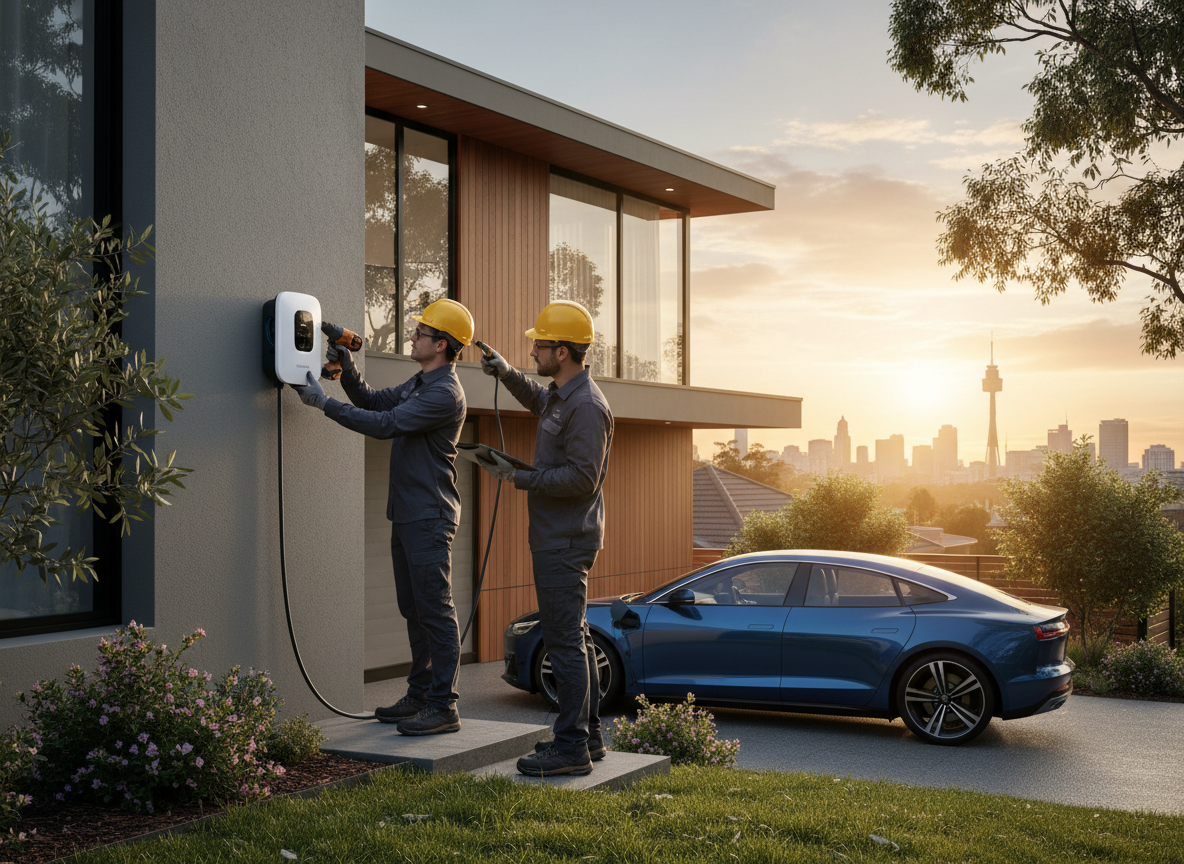
Understanding smart EV chargers and load management
In a Sydney home, a smart charger links to an app or network so you can set charging times, cap the current and watch usage. Load management measures what the rest of the house is drawing and slows the car when cooking, cooling or hot water kick in, so the main supply is not overloaded.
Who a scheduled, balanced charger suits
It suits households on a time-of-use or EV plan who want the car filling up overnight in the cheaper window. It also suits homes with limited spare capacity at the switchboard, or where the charger shares supply with ducted air conditioning, a pool pump or electric cooking.
Why load management can matter more than charger speed
A wall charger running at full rate pulls a large, steady current for hours. Add evening cooking and cooling, and a smaller or older supply can be pushed hard. Load management keeps the combined draw within limits, which can sometimes reduce the need for supply upgrades. That call is made on site by licensed professionals.
Off-peak charging and your power bill
Charging adds energy use, so the bill grows with the kilometres you drive. What a smart charger changes is when that energy is used. Set it to start once your plan's off-peak or EV rate begins and stop when the window closes. Tariff hours differ between retailers and plans, so confirm yours first.
Smart features worth paying for, and the compliance mark
Useful features are app scheduling, adjustable current, load management metering at the switchboard and OCPP support if you may switch apps or providers later. Skip extras you will never open. Whichever unit you pick, check it carries the Regulatory Compliance Mark, as NSW energy guidance recommends for home chargers.
The brand decision without the hype
The right brand is the one that suits your car, your supply and the app you will actually use. Confirm it works with your car's connector, suits single or three phase power at home, and offers the scheduling and load management you need. A charger you have already bought can still be checked before it goes on the wall.
Next step for smart charging at home
Your latest bill shows the off-peak hours; write them down with the main switch rating from the switchboard, your suburb, your car model and any charger on your shortlist. Then request a quote here and a licensed and insured local contractor can follow up.
Smart EV Charger Installation Services We Offer
✓Dynamic Load Management
The charger adjusts its rate as household demand changes, so the car and the rest of the home share the supply without overloading it.
✓Scheduled Off-peak Charging
Charging start and stop times set in the app to match your plan's cheaper overnight or EV rate hours.
✓OCPP Smart Charger Set-up
Chargers that support the open OCPP protocol, set up so you keep the option to change apps or charging providers later.
How it works
- 1
Check your tariff and supply
Find the off-peak or EV rate hours on your plan, note the main switch rating, whether the home is single or three phase, and which large appliances run in the evening.
- 2
Choose the charger and settings
Shortlist chargers with the Regulatory Compliance Mark that suit your car and supply, with app scheduling, adjustable current and load management that fit how the household uses power.
- 3
Install and set up the app
The charger goes on its own circuit, load management metering is fitted at the switchboard where needed, and the app is linked with a schedule matched to your tariff window.
- 4
Testing and compliance certificate
The electrical work is tested and a Certificate of Compliance for Electrical Work is lodged through BCNSW eCert within seven days of testing. Keep a copy with your charger and app details.